Remember when you slept eight hours and woke up feeling like you could deadlift a car?
Yeah. Me neither. Not anymore.
Somewhere between adulthood and answering emails at 10pm, our bodies forgot how to recover properly. That soreness that used to fade in a day now camps out for a week. The muscle that once showed up after a few good workouts? It’s playing hard to get.
Enter the stack that’s been popping up in research conversations everywhere: Ipamorelin and CJC-1295.
I kept seeing these two names together like peanut butter and jelly, so I finally dug into why. Turns out, there’s some genuinely clever science behind the pairing.
First, Let’s Meet the Players
Ipamorelin: The Gentle Giant
Ipamorelin is what researchers call a growth hormone secretagogue. Fancy term, simple idea—it tells your body to release more growth hormone.
But here’s what makes it interesting: Ipamorelin is specific. It doesn’t scream at all your hormone receptors like a drill sergeant. It taps a few on the shoulder and says, “Hey, whenever you’re ready.”
This matters because some other compounds in this family can spike hunger hormones or leave you feeling off. Ipamorelin? Clean. No weird hunger pangs. No drama. Just a signal to release growth hormone in a more natural pulse.
CJC-1295: The Timer
If Ipamorelin is the messenger, CJC-1295 is the clock.
CJC-1295 is a growth hormone releasing hormone (GHRH) analog. Translation? It increases the amount of growth hormone your body releases during those natural pulses—especially the big one that happens while you sleep.
What makes CJC special is its half-life. Without getting too technical, it sticks around longer than other options, which means more consistent signaling over time.
Why They’re Better Together
Here’s the part that made me nod along when I finally understood it.
Think of your body’s growth hormone release like a party.
Ipamorelin shows up and says, “Let’s get this party started!”
CJC-1295 walks in and says, “Great idea—I brought more speakers and a keg.”
One initiates the pulse. The other amplifies it. Together, they create a stronger, more sustained release than either could alone.
Researchers call this synergy. I call it common sense—why settle for one tool when two designed to work together exist?
What Researchers Are Actually Seeing
I’ve talked to enough people running protocols to spot patterns. Here’s what keeps coming up with this stack:
Better Sleep, Like Actually
Not the “I guess I slept okay” kind. The “I woke up before my alarm and didn’t hate existing” kind.
Growth hormone release peaks during deep sleep. By supporting that natural rhythm, researchers report falling asleep faster and sleeping through the night. No 3am existential crises. Just sleep.
Recovery That Keeps Up
You know that day-two soreness that makes stairs your enemy? Seems to fade faster with this stack.
The theory makes sense—growth hormone is directly involved in tissue repair. Give your body more of what it needs for recovery, and recovery happens quicker. Not rocket science.
Body Composition Shifts
Here’s where people get excited.
Researchers consistently report gradual changes in body composition—lean mass hanging around longer, stubborn fluff slowly saying goodbye. Nothing dramatic or overnight. But over weeks? Noticeable enough that people keep ordering more.
Skin and Hair (The Unexpected Bonus)
This one caught me off guard until I remembered: growth hormone affects everything, including skin thickness and hair follicles.
I’ve heard multiple anecdotes about nails growing faster, skin looking less like old leather, and hair acting healthier. Not the reason most people start, but a welcome surprise.
The “Natural” Question Everyone Asks
Let’s address the elephant because I know you’re thinking it.
Is this “natural”?
Depends on your definition.
Does it introduce foreign hormones into your body? No. Both compounds work by signaling your own pituitary gland to release your own growth hormone. You’re not injecting synthetic HGH. You’re turning up the volume on what your body already does.
But does it require research and careful protocols? Absolutely. This isn’t drinking a green smoothie. It’s purposeful intervention.
I land somewhere in the middle: it’s supporting natural processes with research tools. Not “all-natural” in the granola sense, but not synthetic hormones either. A middle path.
What This Stack Is NOT (Important!)
Before we go further, let’s kill some myths:
It’s not steroids. Zero androgenic effects. No mood swings, no aggression, no hair loss from hell.
It’s not fast. This isn’t “take this and get shredded in two weeks.” We’re talking gradual shifts over months.
It’s not for everyone. Pregnant? Nursing? Under 30 with naturally high growth hormone? Probably not the right research protocol.
It’s not magic. It supports what your body already does. If your diet’s trash and you sleep four hours a night, no peptide on earth will fix that.
The Practical Side: What Researchers Need to Know
If you’re considering diving into the research (and I’m guessing you are), here’s the practical stuff:
Form: Both are typically injectable peptides. Subcutaneous shots, not intramuscular. Think insulin needle, not horse syringe.
Timing matters: Most protocols dose before bed to align with the natural nighttime growth hormone pulse. Some also dose upon waking. Consistency beats timing obsession.
Cycle length: Common protocols run 8-12 weeks with a break. This isn’t a lifetime thing—you want to give your body’s natural systems room to breathe.
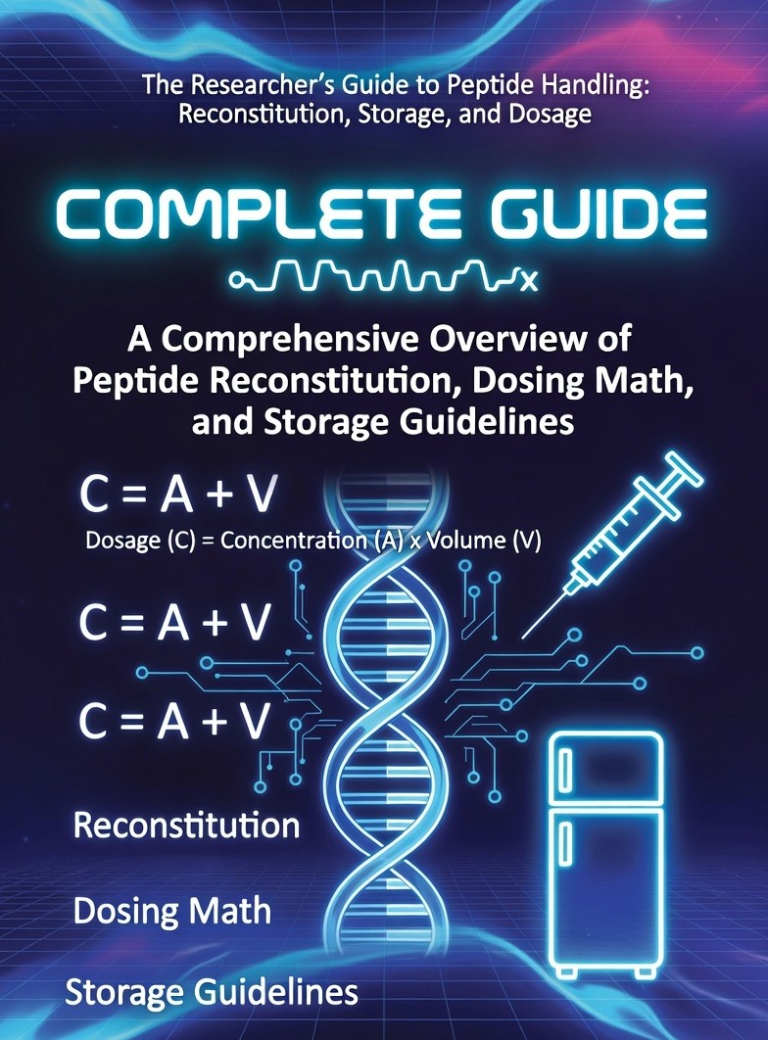
Storage: Both need refrigeration. Heat is the enemy. Treat them like expensive probiotics, not shelf-stable protein powder.
The Honest Truth
Look, I’m not here to sell you on anything.
The Ipamorelin and CJC-1295 stack is fascinating because it works with your biology instead of overriding it. That’s rare in the world of performance research. Most tools scream at your body. This one whispers.
Does it replace good sleep, solid nutrition, and smart training? Absolutely not. If anything, it amplifies them. You still have to do the work.
But for researchers exploring the edge of recovery science? This duo keeps coming up for a reason.
What’s Your Experience?
Here’s what I’m genuinely curious about:
Have you researched either of these peptides? What did you observe?
Or maybe you’re just starting to explore growth hormone peptides and have questions swirling.
Drop a comment below or reach out. I read everything, and honestly? The collective knowledge in this community blows my mind. Let’s keep learning together.
Curious about other peptide stacks? Check out our Peptide Stacks 101 guide for more research combinations.