What if I told you there’s a peptide that doesn’t care about your muscles, your joints, or your recovery—at least not directly?
It’s after something much bigger.
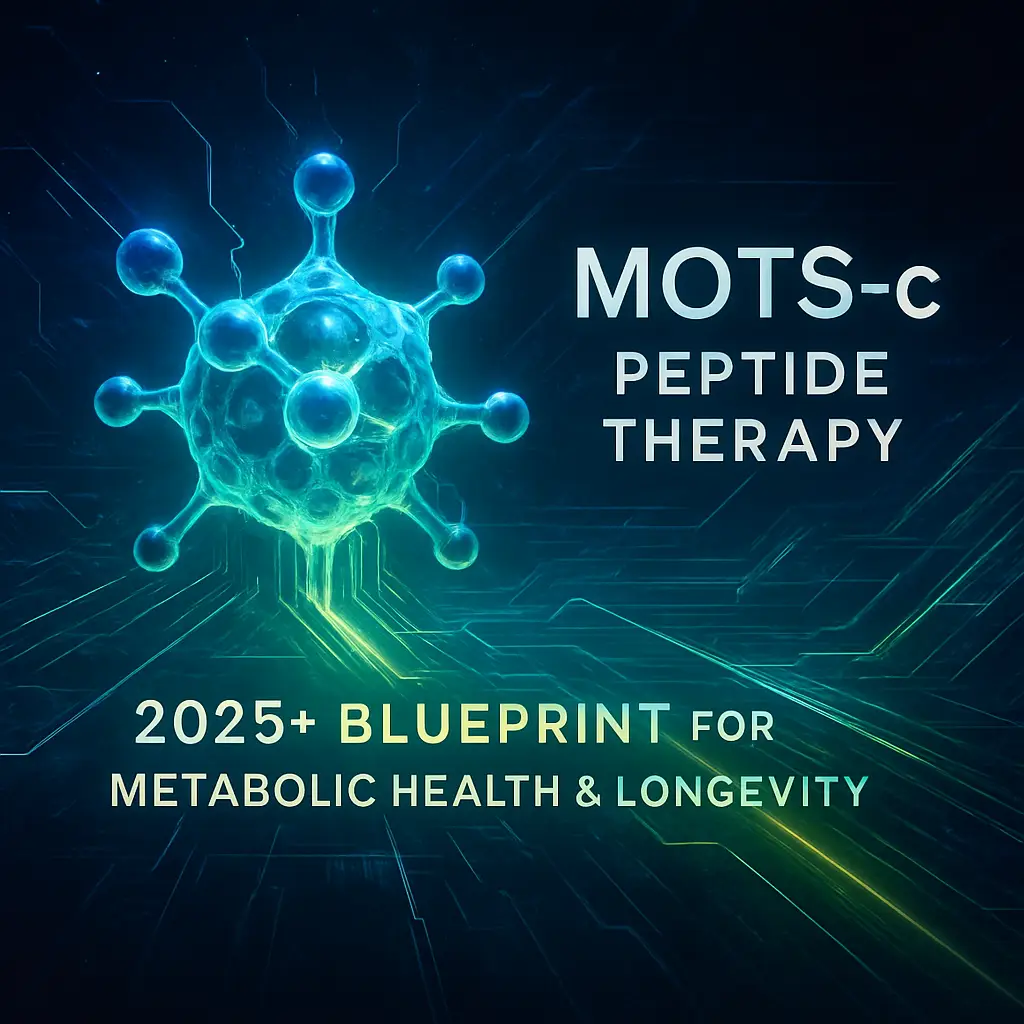
Deep inside your cells, tiny powerplants called mitochondria are working 24/7 to keep you alive. They turn food into energy, drive every bodily process, and when they start failing? That’s when aging really shows up.
Enter MOTS-c.
This one’s different from the peptides we usually talk about. It’s not a growth hormone secretagogue. It’s not a healing compound. “MOTS-c belongs to a completely separate category—[mitochondrial-derived peptides] .”—and the research emerging around it is honestly kind of mind-blowing.
Let’s dive in.
Wait, Mitochondria Have Their Own Peptides?
This was my first question too.
Turns out, “According to [mitochondrial research] , mitochondria aren’t just passive energy factories. They communicate.” They send signals to the rest of your cell, to other cells, even to your muscles and brain. And one of the ways they do that? Through small peptides they produce themselves.
MOTS-c is one of these. It’s a peptide encoded not in your nuclear DNA (the stuff that makes you you), but in your mitochondrial DNA.
Think about that for a second. Your mitochondria are literally making their own signaling molecules to talk to the rest of your body. It’s like finding out your furnace has been sending memos to your brain about how to run the house.
What Does MOTS-c Actually Do?
This is where it gets exciting.
MOTS-c’s primary job seems to be metabolic regulation. It helps your body sense energy status and adapt accordingly. When researchers study it, a few key effects keep showing up:
1. It Mimics Exercise (Sort Of)
Here’s the finding that made headlines: MOTS-c appears to activate many of the same pathways as physical activity.
Not in a “you’ll never need to work out again” way. More like it encourages your muscles to behave as if they’re in an exercise state—taking up more glucose, burning more fuel, being more metabolically active.
One study showed MOTS-c could increase glucose uptake in muscle cells even without insulin. For researchers interested in metabolic health, that’s a pretty big deal.
2. It Fights Age-Related Metabolic Decline
As we get older, our cells become less responsive to insulin. We gain fat more easily. We lose muscle. Energy flags.
MOTS-c seems to push back against this. Research suggests it improves insulin sensitivity, helps regulate fat metabolism, and supports healthy body composition—all by telling mitochondria to get their act together.
3. It Extends Lifespan in Animal Models
I’m careful with this one because “longevity” claims are everywhere and usually overblown.
But here’s what’s real: “In [animal studies (NIH)] , increasing MOTS-c activity has been linked to extended healthspan.” (the years you live well, not just the years you exist). Mice with higher MOTS-c levels show better metabolic profiles and delayed age-related decline.
Does that mean it’ll make humans live to 150? No. Does it suggest mitochondrial communication plays a role in healthy aging? The research says yes.
4. It Protects Against Stress
There’s emerging data suggesting MOTS-c helps cells handle stress better—oxidative stress, metabolic stress, the general wear-and-tear of existing. It’s like your mitochondria have a built-in emergency response system, and MOTS-c is the alarm.
Why This Matters for Fitness and Performance
Okay, so it’s a mitochondrial peptide. Cool. But what does that mean for someone trying to recover from leg day or drop a few kilos?
Here’s the connection:
Your mitochondria determine your energy production.
Better mitochondrial function means:
- More endurance (your cells can actually use oxygen)
- Faster recovery (energy for repair processes)
- Better metabolic flexibility (burning fat when you should, carbs when you should)
- Less fatigue (because your cells aren’t struggling to keep up)
MOTS-c essentially tells your mitochondria: “Hey, we need to step it up. More efficiency. More adaptation. Let’s go.”
The result? Researchers report improved endurance, better body composition shifts, and that elusive “I just feel more energetic” effect that’s hard to measure but impossible to fake.
The Heat Connection Nobody Saw Coming
Here’s a weird one I stumbled across while researching.
MOTS-c appears to play a role in thermal regulation—how your body responds to heat and cold. Some researchers think it might help activate brown adipose tissue (the “good” fat that burns energy to generate heat).
Why does this matter?
Because activating brown fat is like turning on an internal furnace. It burns calories. It improves metabolic health. It’s something researchers have been trying to figure out for years.
If MOTS-c helps flip that switch? Suddenly it’s not just about longevity—it’s about metabolic optimization right now.
What MOTS-c Is NOT
Let’s clear up some confusion before we go further.
MOTS-c is not a growth hormone peptide. It doesn’t touch the GH/IGF-1 axis. You won’t get the sleep benefits or recovery effects of something like Ipamorelin.
It’s not a rapid fat burner. This isn’t clenbuterol or some stimulant stack. The effects are metabolic and gradual.
It’s not a muscle builder. Not directly anyway. By improving energy production and metabolic health, it supports muscle function. But you’re not going to pack on size from MOTS-c alone.
It’s not well-studied in humans yet. Most of the exciting data comes from animal models and cell studies. Human research is catching up, but we’re still early.
“For researchers who have studied its effects and are ready to proceed, our [MOTS-c 10mg is available for laboratory use only] .”
The Practical Side: What Researchers Need to Know
If you’re considering adding MOTS-c to your research protocols, here’s what you should know:
Form: MOTS-c is typically injectable. Subcutaneous administration is standard.
Dosing: Most protocols I’ve seen run 5-10mg per injection, often 3-5 times per week. Cycles tend to be shorter—4-6 weeks—because mitochondrial adaptation happens faster than other pathways.
Timing: Some researchers prefer morning dosing to align with metabolic rhythms. Others split doses. Consistency seems more important than perfect timing.
Stacking potential: Here’s where it gets interesting. MOTS-c pairs well with other metabolic peptides like AOD9604 or even growth hormone secretagogues (since better mitochondria support better recovery). But stacking requires real knowledge—don’t wing it.
Storage: Like all peptides, keep it cool. Refrigerator, stable temperature, no freeze-thaw cycles. Treat it like the delicate molecule it is.
The Longevity Perspective
I spend maybe too much time reading aging research. It’s a fascination that borders on obsession.
Here’s what stands out about MOTS-c: most anti-aging interventions target one pathway. Senolytics clear old cells. NAD+ boosters support energy. Rapamycin inhibits mTOR.
MOTS-c is different. It’s mitochondrial communication. It’s your cells telling each other: “We’re aging. Let’s adapt.”
That systems-level approach—working with your body’s existing signaling instead of overriding it—feels like the future of longevity research. We’re not trying to hack biology. We’re trying to understand what it’s already saying and help it along.
The Honest Truth
I’ll be straight with you.
MOTS-c isn’t the most glamorous peptide. It won’t heal your torn hamstring overnight. It won’t give you the best sleep of your life. It won’t pack visible muscle onto your frame in weeks.
What it might do is more fundamental: improve how your cells produce energy, how they handle stress, and how they age.
That’s not sexy. But it matters.
Every other peptide we discuss—the healers, the growth hormone stimulators, the recovery compounds—all of them depend on healthy mitochondrial function to work. If your cells can’t produce energy efficiently, nothing else works right.
MOTS-c addresses the foundation.
What’s Your Experience?
Here’s what I’m genuinely curious about:
Have you researched MOTS-c? What did you observe—especially around energy, endurance, or metabolic changes?
Or maybe you’re new to mitochondrial peptides and have questions swirling.
Drop a comment below or reach out directly. This stuff is evolving fast, and the best insights come from conversations, not textbooks.
Let’s figure it out together.
Want to stay updated on the latest peptide research—including emerging mitochondrial compounds? Join our newsletter below. No spam, just science when it matters.
“If your research protocol includes MOTS-c, you can find our high-purity MOTS-c 10mg vials here.”
Ready to research MOTS-c?
Shop MOTS-c 10mg →